During this February, the opera Norma premiered on the main stage of the Split Croatian National Theatre in collaboration with the Ivan pl. Zajc Croatian National Theatre from Rijeka, under the direction of maestro Antonio Pirolli.
The character of the druid priestess was brought to life, both vocally and visually, by the Italian soprano Daniela Schillaci, already known to the Split audience, while the lead male role of Pollione went to the tenor Božo Jurić Pešić.
The young Adalgisa was portrayed by Antonija Teskara, and among other notable names, mention should be made of Ivica Čikeš, who embodied Oroveso, Norma’s father, the chief of the Druids.
Students of our school also had the opportunity, on the twenty-sixth of February, to become acquainted with this opera under the guidance of teachers Gabrijela Terzić and Nataša Poljak.
The usual definition of opera would be a musical, sung and stage work created on the basis of a carefully conceived libretto. But behind this somewhat dry constellation lies something far more powerful.
All those who know and love opera know that it represents the essence of powerful life emotions such as love, passion, hatred and revenge. Opera, in fact, elegantly parts the curtains of the subconscious urges by which our actions are often motivated.
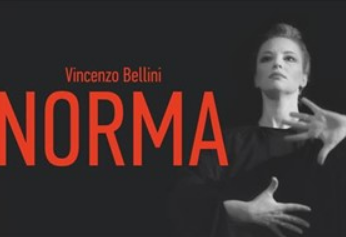
Thus, Norma represents a woman torn apart by the force of eruptive emotions. Namely, as a druid priestess she must not love the enemy Roman Pollione, but she breaks the rules and embarks on a secret love affair, from which she later has children with him. But the whirlwind of suffering into which she sinks ever deeper begins when she learns that Pollione no longer loves her but the young Adalgisa.
That moment marks the beginning of Norma’s layered emotional metamorphosis; from fear for her children and intense jealousy to burning hatred towards Pollione. The struggle that takes place within this distinctive heroine is powerfully emphasised in the demanding coloraturas, and the ending brings her tragic conclusion as well as Pollione’s rekindled love.
As I write this, I must admit that I was somewhat haunted by the doubt of how the students would react to something as serious and complex as opera?! Would that supposedly digital generation have enough patience, and the will, not to say the courage, to immerse themselves in the whirlwind of Norma’s emotions?
Fortunately, the reception of the student body was surprisingly positive, and I learned a lesson; one should not be a slave to empty generalisations. Therefore, paraphrasing the famous saying of Dražen Siriščević, for all the students who will become opera lovers we bring a few comments!
Norma Through the Student Kaleidoscope
The opera Norma is in itself a work of art that tells of the forbidden love between Norma, Pollione and Adalgisa. What I like most is the climax of the action, in which we see the true face of the main heroine, Norma. The expression of her emotions towards Adalgisa and the children tells us what kind of person she truly is.
I also like the ardour of love, the constant struggle the main heroine goes through; Pollione’s belief in true love rather than in a multitude of gods. Pollione considers Norma to be an evil, heartless person, but in the very end he understands her true character and her self-sacrifice for the Gallic people. As many operas end tragically, so too did Norma end with the death of the heroine of the same name and of Pollione, intertwined in the deep flame of love. The work we watched is very emotional, and I believe that the coming generations should watch it or at least know something about the heroes of this love story.
Martina Ivčević, 1.a

